Difference Between Bitcoin and Other Cryptocurrencies


Bitcoin is a household name, recognized by millions worldwide, but it's only one part of a much larger digital asset revolution. While Bitcoin was the original cryptocurrency, there are now thousands of alternatives—each with their own features. So, what’s the real difference between bitcoin and cryptocurrency as a whole? In this article, you’ll learn how Bitcoin stands out from other digital coins in terms of origin, technology, main uses, and investment considerations. We’ll break down everything from key technical differences, to real-world examples, to what it all means for investors like you.
What Is Bitcoin?
Bitcoin is the world’s first cryptocurrency, created to enable peer-to-peer value transfer without intermediaries. Invented by the pseudonymous Satoshi Nakamoto in 2009, Bitcoin’s main goal was to build a system where users can send “digital cash” directly to each other.
Bitcoin is powered by a decentralized blockchain: a public ledger maintained by thousands of participants around the world. Thanks to its fixed supply—capped at 21 million coins—Bitcoin is often compared to digital gold. This scarcity, along with its robust design, are key reasons why it’s remained dominant for over a decade.
New Bitcoins are created through a process called mining, where powerful computers compete to validate transactions and secure the network. Once mined, Bitcoins can be stored, transferred, or traded—without reliance on any central bank or company.
💡 Pro Tip: Bitcoin education is essential for anyone new to crypto. Platforms like OKX offer detailed guides, tutorials, and demo tools to help beginners understand Bitcoin safely.
How Bitcoin Works
At its core, Bitcoin uses blockchain technology: every transaction is grouped into a block, which is then added to a chain for a permanent record. Transactions are secured using cryptography and public-private keys. Importantly, Bitcoin has a strict supply limit of 21 million coins, making it immune to the inflation risks tied to traditional currencies.
What Is a Cryptocurrency?
Cryptocurrency is a digital asset class that uses encryption for security, operates on blockchain or similar distributed ledger technologies, and isn’t controlled by centralized authorities. While Bitcoin launched the concept, many other cryptocurrencies—ranging from coins to tokens—now exist across multiple blockchains.
A cryptocurrency can serve as digital money, a way to run smart contracts, or grant access to decentralized applications (dApps). Ethereum, Ripple (XRP), and Litecoin are examples of major non-Bitcoin cryptocurrencies; each addresses unique challenges or expands blockchain use beyond digital cash.
On platforms like OKX, users can explore, trade, and learn about a wide variety of cryptocurrencies—each with differing technical foundations and use cases.
Types of Cryptocurrencies
- Coins: Native to their blockchains (e.g., Bitcoin on Bitcoin, Ether on Ethereum)
- Tokens: Built on top of blockchains, often serving a specific purpose (e.g., Uniswap’s UNI token on Ethereum)
- Stablecoins: Pegged to currencies like the dollar (e.g., USDT, USDC)
- Privacy coins: Focused on anonymous transactions (e.g., Monero)
Some coins aim for speed and efficiency; others power gaming, finance, or identity applications.
Key Differences: Bitcoin vs Other Cryptocurrencies
Though “cryptocurrency” includes all blockchain-based digital assets, the difference between bitcoin and cryptocurrency is significant. Here’s where they diverge:
- Historical Origin: Bitcoin was created in 2009 to solve a specific problem—trustless peer-to-peer payments. Other cryptocurrencies (altcoins) often launched later to address features Bitcoin lacks, like programmability or transaction speed.
- Blockchain Technology: Bitcoin uses a straightforward blockchain prioritizing security and decentralization. Many altcoins have different architectures—Ethereum, for example, supports smart contracts enabling decentralized apps.
- Supply Models: Bitcoin’s capped supply at 21 million coins is unique. Most altcoins have different limits—or none at all—impacting scarcity and inflation.
- Security & Decentralization: Bitcoin’s network is considered highly secure and decentralized. Some altcoins trade this for speed or added features, changing the trust model.
- Adoption & Liquidity: Bitcoin has the largest user base and is universally accepted by crypto exchanges like OKX, while some altcoins have niche or experimental use.
OKX stands out as a secure multi-coin exchange, letting users buy, sell, and compare a broad selection of both Bitcoin and altcoins.
Origin and Development
- Bitcoin: Invented in 2009, first-ever cryptocurrency, driven by decentralization and digital scarcity.
- Altcoins: Emerged post-2011, introducing innovations—smart contracts (Ethereum, 2015), privacy tech (Monero, 2014), or faster settlements (Litecoin, 2011).
Purpose and Use Cases
- Bitcoin: Primarily “digital gold”—a store of value and means of global transfer.
- Altcoins: Expand to programmable money (Ethereum), instant cross-border payments (Ripple), stable digital dollars (USDT, USDC), or private transactions (Monero).
Security and Consensus Mechanisms
- Bitcoin: Relies on proof-of-work—miners secure the blockchain with computational power.
- Altcoins: Some use proof-of-stake (Ethereum post-2022), delegated proof-of-stake, or alternative models like proof-of-authority, leading to differences in energy use, scalability, and security.
💡 Pro Tip: Before investing, compare each coin’s consensus method and track record for hacks or downtime.
Bitcoin vs Ethereum: Most Popular Comparison
Bitcoin and Ethereum are the two heavyweights of crypto, yet they were designed for different purposes and run on distinct technology.
- Bitcoin: Focused on secure, censorship-resistant money transfers and long-term value storage.
- Ethereum: Launched in 2015, built to enable decentralized applications using “smart contracts,” letting code execute if certain conditions are met.
OKX allows users to seamlessly trade, compare, and learn about Bitcoin and Ethereum side-by-side—ideal for those weighing the two assets.
Technical Differences
- Consensus: Bitcoin relies on energy-intensive proof-of-work, while Ethereum now runs on “proof-of-stake,” which is more eco-friendly and allows faster transaction processing.
- Programmability: Ethereum supports complex smart contracts, powering DeFi, NFTs, and more. Bitcoin’s programmability is limited by design to ensure security.
- Supply: Bitcoin is capped at 21 million coins; Ethereum has no fixed max supply but is undergoing changes (like EIP-1559) to control inflation.
Market Performance
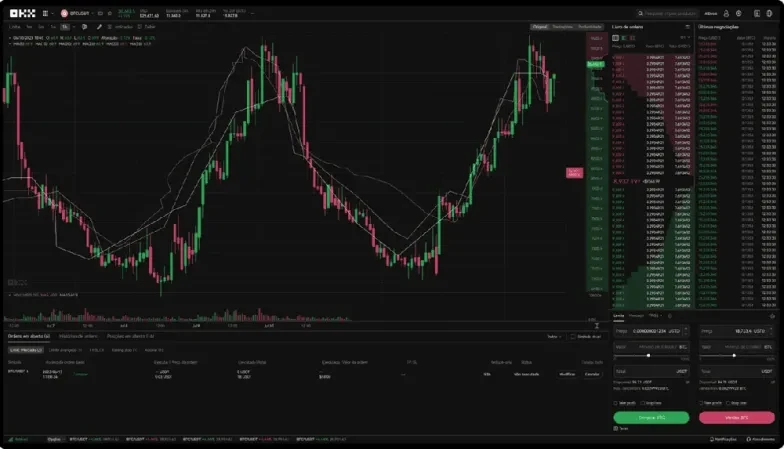
Historically, Bitcoin’s price has seen dramatic swings—from under $1 in 2009, to over $60,000 in 2021, with major peaks and valleys along the way. Ethereum followed a similar growth curve but tends to be more volatile due to rapid innovation and evolving technology. Both coins are highly liquid and widely traded, but Bitcoin generally dominates in market capitalization.
Other Major Cryptocurrencies: A Quick Overview
Cryptocurrency is more than just Bitcoin and Ethereum. Here are three other leading altcoins:
- Litecoin (LTC): Launched in 2011 as “the silver to Bitcoin’s gold.” It’s designed for faster transactions with lower fees, but with a higher total supply (84 million coins).
- Ripple (XRP): Built to facilitate ultra-fast, low-cost cross-border bank transfers. Unlike Bitcoin, XRP isn’t mined—its supply was pre-created, making it popular for institutional settlements.
- Monero (XMR): Focuses on privacy and anonymity. Monero uses advanced cryptography to obfuscate sender, receiver, and transaction amounts.
OKX grants access to all these coins and many more—including unique, up-and-coming altcoins not always listed elsewhere.
Summary Table: Bitcoin vs Other Cryptocurrencies
| Currency | Year Launched | Main Purpose | Max Supply | Consensus | Blockchain |
|---|---|---|---|---|---|
| Bitcoin | 2009 | Store of value, digital money | 21 million | Proof-of-work | Bitcoin |
| Ethereum | 2015 | Smart contracts, dApps | Unlimited* | Proof-of-stake | Ethereum |
| Litecoin | 2011 | Faster payments | 84 million | Proof-of-work | Litecoin |
| Ripple (XRP) | 2012 | Cross-border settlements | 100 billion | Federated consensus | XRP Ledger |
| Monero | 2014 | Private transactions, anonymity | Unlimited | Proof-of-work | Monero |
*Ethereum supply is not capped, but recent upgrades aim to reduce inflation.
Tokens like these are available for trade and research on OKX, empowering users to explore the full crypto landscape.
Why Do These Differences Matter? (Investment Implications)
Understanding the difference between bitcoin and cryptocurrency isn’t just academic. These distinctions matter deeply for anyone considering investing:
- Volatility: All cryptocurrencies can be volatile, but Bitcoin generally sees less extreme swings compared to newer altcoins. Altcoins, especially smaller ones, often react more to news, upgrades, or speculative trading.
- Risk Factors: Bitcoin is seen as “digital gold”—a relative safe haven in crypto. Altcoins offer greater innovation and higher potential returns, but also higher risks (such as lower liquidity, regulatory scrutiny, or unproven technology).
- Regulation: Bitcoin’s decentralized, established status means it’s largely recognized by regulators. Many altcoins face uncertain legal environments or evolving rules, which may impact listing or use.
- Security: Bitcoin’s long uptime and massive network make it hard to attack. Smaller coins may be more vulnerable to hacks or technical flaws.
Before you invest:
- Research the coin’s tech and team
- Understand its actual use case and adoption
- Assess liquidity and security history
Platforms like OKX offer extensive research tools, price charts, and learning hubs so users can make informed, safer decisions.
💡 Pro Tip: Never invest more than you can afford to lose, and always enable strong security measures—like two-factor authentication—on your exchange and wallet accounts.
Risk Disclaimer: Cryptocurrency investments are subject to high market risk, regulatory change, and volatility. Prices may increase or decrease quickly. Always do your due diligence and consult with a financial advisor if needed.
- Explore crypto price today
- Try our Crypto converter to convert crypto to Fiat
- Buy Crypto
- Check our crypto exchange rates
- Browse the latest Crypto Market News
Frequently Asked Questions
What is the difference between bitcoin and cryptocurrency?
- Bitcoin: A specific cryptocurrency, the first and most prominent.
- Cryptocurrency: The broad category covering all digital coins and tokens—including Bitcoin, Ethereum, and thousands more.
Bitcoin vs ethereum which is better?
Both have strengths:
- Bitcoin: More established, widely adopted, and seen as a store of value.
- Ethereum: More versatile thanks to smart contracts, powers dApps and DeFi. The best choice depends on your goals.
Bitcoin vs ethereum differences?
- Supply: Bitcoin’s is fixed; Ethereum’s is flexible.
- Consensus: Bitcoin uses proof-of-work; Ethereum, proof-of-stake.
- Use Case: Bitcoin = digital gold; Ethereum = programmable blockchain for apps.
What is ethereum vs bitcoin?
Ethereum builds on Bitcoin's foundations but introduces smart contract capability, enabling more complex decentralized applications—whereas Bitcoin is focused on payments.
Bitcoin vs ethereum which is better investment?
It depends. Bitcoin is less volatile and often seen as a safer long-term store of value. Ethereum may provide higher gains but also carries more risk. Diversify and research before investing.
Conclusion
In summary, Bitcoin was the original cryptocurrency and remains the market leader due to its strong security, fixed supply, and network effect. However, altcoins like Ethereum, Ripple, and Monero drive innovation—bringing unique features like smart contracts and privacy tools.
Here are the key takeaways:
- Bitcoin acts as digital gold, while altcoins expand on its technology
- Each crypto has its own consensus model, supply, and use case
- Investment risks and rewards differ greatly; research before you trade
- OKX offers secure access and learning resources for both Bitcoin and hundreds of altcoins
Ready to compare or learn more? Try OKX’s advanced tools and Academy to explore the difference between bitcoin and cryptocurrency, and discover which assets match your goals.
© 2025 OKX. Denna artikel får reproduceras eller distribueras i sin helhet, eller så får utdrag på 100 ord eller mindre av denna artikel användas, förutsatt att sådan användning är icke-kommersiell. All reproduktion eller distribution av hela artikeln måste också anges på en framträdande plats: ”Den här artikeln är © 2025 OKX och används med tillstånd.” Tillåtna utdrag måste hänvisa till artikelns namn och inkludera attribut, till exempel ”Artikelnamn, [författarens namn om tillämpligt], © 2025 OKX.” En del innehåll kan genereras eller assisteras av verktyg med artificiell intelligens (AI). Inga härledda verk eller annan användning av denna artikel är tillåten.